Skip to content
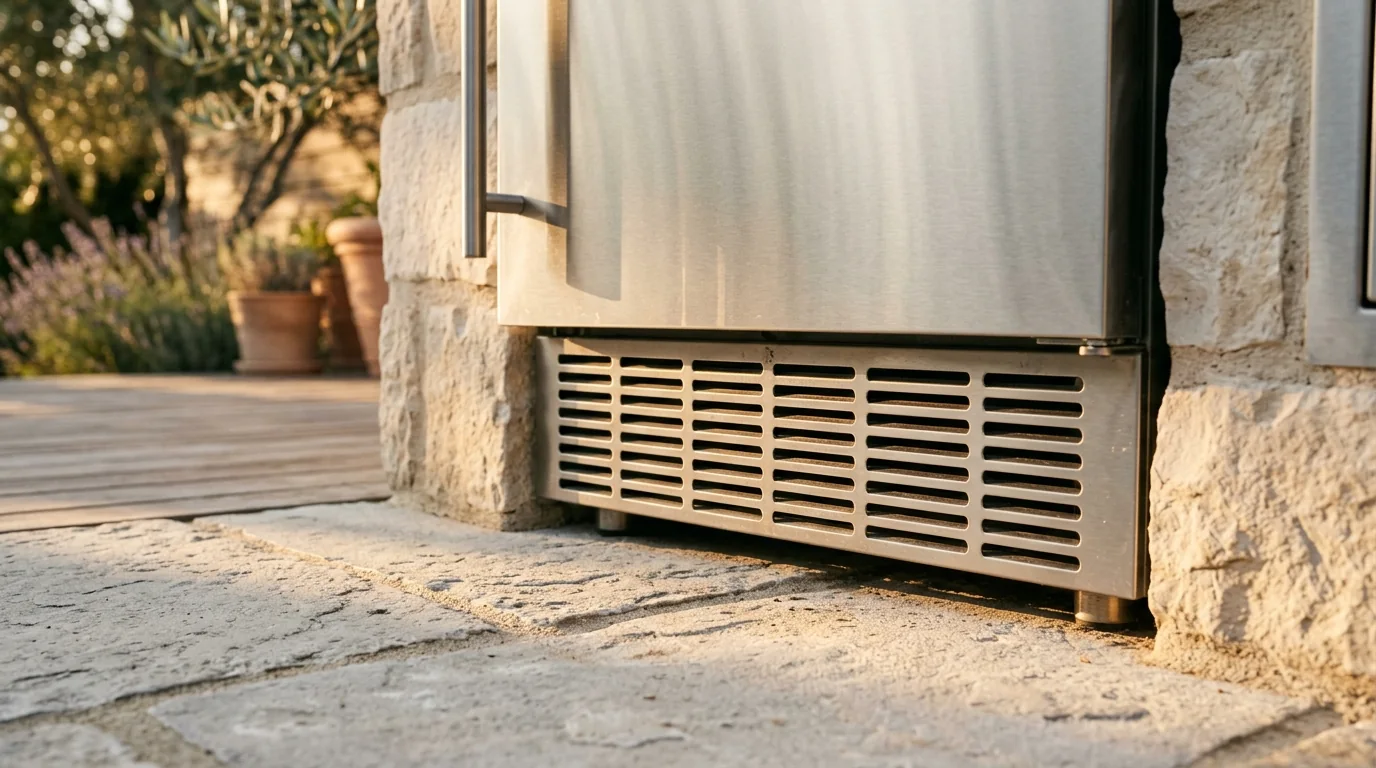
Sunlit toe-kick ventilation grille at the base of a stainless under-counter outdoor refrigerator set into a pale stone island

Venting guide

Why front venting matters for an outdoor beverage refrigerator

By the Patio Fridge Lab editorial deskDesk research method — specs and listings, no hands-on testingUpdated

A visible toe-kick grille is the buying signal: front venting is what lets a fridge survive a sealed island.

Short answer

If the fridge goes under a counter or inside an outdoor island, front venting is usually the safest choice because the hot air exits through the front grille instead of being trapped inside the cabinet.

Where front venting matters

  • Built-in island — Choose front venting. The cabinet surrounds the unit, so side and rear airflow may be blocked.
  • Freestanding bar — Rear or side venting can work only when the manufacturer-required clearance is left open.
  • Unclear listing — If the listing does not show the vent path, do not assume it is safe for a tight cabinet.

Airflow path

A built-in fridge needs a place to dump heat. In a good under-counter design, air can move through the front grille instead of collecting inside the island. If trim, stone, or a toe-kick panel covers the grille, the fridge can behave like a bad product even if the unit itself is fine.

  • Built-in path — Heat exits through the front grille where it can escape the cabinet.
  • Blocked path — Rear or side heat can get trapped when the appliance is boxed into stone or cabinetry.

What to look for

Look for a toe-kick grille, front exhaust language, built-in installation support, and dimensions that include the full depth. Also read reviews for phrases like runs hot, cabinet heat, compressor, and cooling recovery. Those comments often reveal whether buyers installed the unit in the same way you plan to.

Signs the listing is safe for built-in use

The product page should show a front grille, mention built-in or under-counter installation, publish a cutout range, and explain clearance needs. If the page only says freestanding, treat that as a different category.

Signs to slow down

Be careful with listings that hide the back and sides in photos, never show the vent, or rely only on staged patio images. Lifestyle photos do not prove the compressor can breathe in your island.

Reading review phrases

Review phrase What it might mean How to use it
Runs hot Cabinet airflow or compressor strain Check whether reviewers installed it built-in or freestanding.
Does not cool under counter Possible blocked vent path Slow down unless the manual clearly supports your install.
Quiet on patio Good social-space signal Useful if the fridge sits near seating rather than a loud pool area.

Why this page matters

Venting is one of the easiest details to miss because it is not exciting. It is also one of the most expensive mistakes. A blocked vent can make a good fridge act like a bad one.
Product shortlist

Fridges that match this guide

Best front-vent baseline

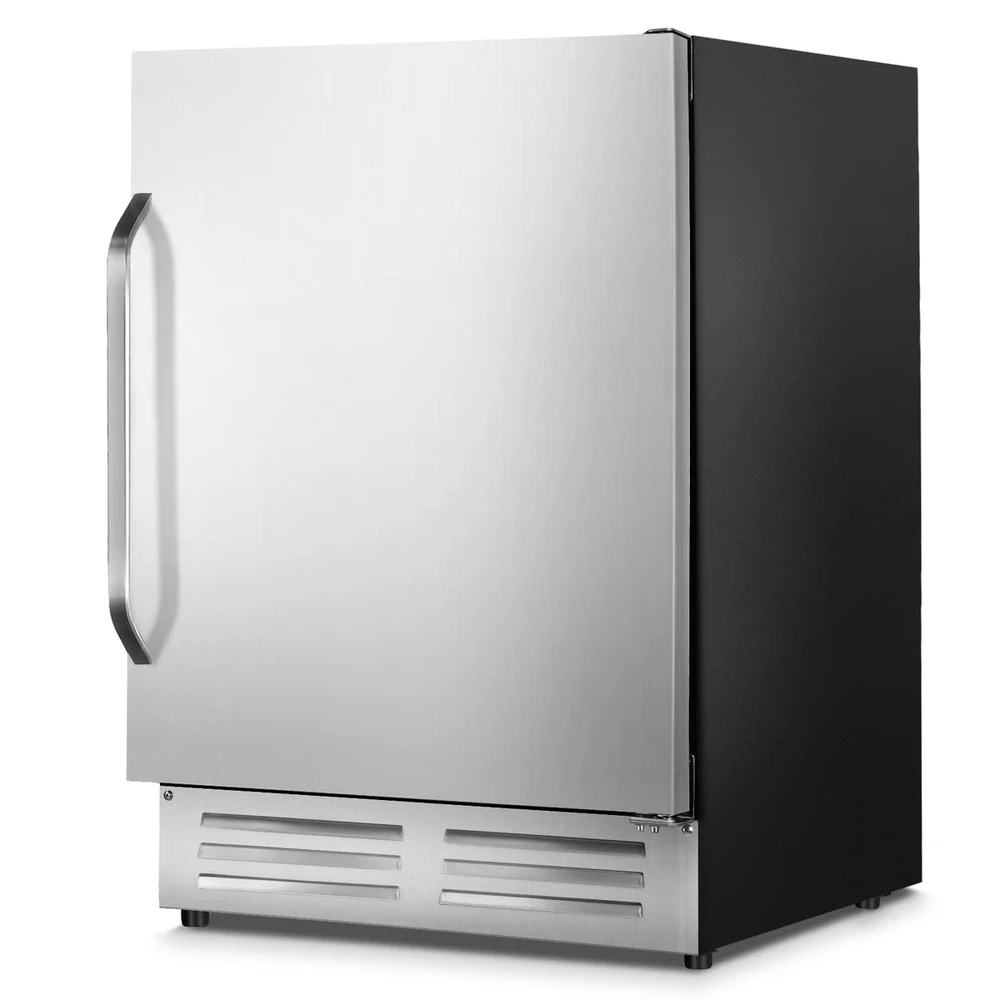
Velieta 24 inch stainless steel outdoor beverage refrigerator with a solid door, freestanding or built-in
Type
Outdoor beverage fridge
Capacity
5.3 cu ft / up to 210 cans
Dimensions
22.63"D x 23.42"W x 34.25"H
Door
Solid stainless
Venting
Front vent
Install
Built-in or freestanding
Lock
Confirm on listing

A direct match for buyers who want a built-in stainless beverage fridge with the front-grille idea this guide explains.

Best for: A standard 24-inch outdoor-kitchen bay that needs a sun-friendly stainless door.

Skip if: A glass display door matters more than sun protection.

Confirm before you buy

Confirm front-vent language on the live Amazon listing and match the dimensions to the cabinet.

Check price on Amazon

Best outdoor-kitchen upgrade

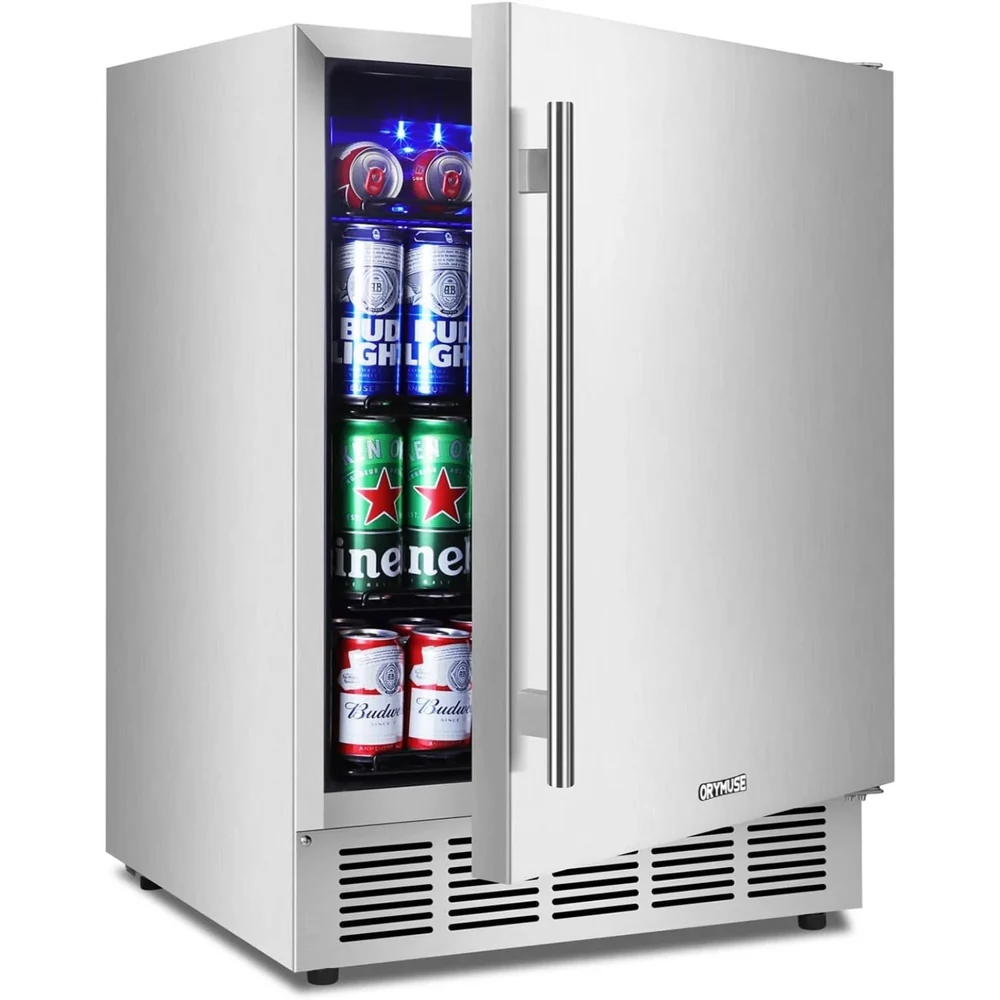
ORYMUSE 24 inch stainless steel outdoor beverage cooler with a solid seamless door, undercounter built-in, holds up to 180 cans
Type
Outdoor beverage fridge
Capacity
4.9 cu ft / up to 180 cans
Dimensions
22.64"D x 23.43"W x 34.25"H
Door
Solid stainless
Venting
Front vent
Install
Built-in
Lock
Confirm on listing

Use this when the buyer wants a more premium stainless path and a finished outdoor-kitchen look.

Best for: A finished, covered outdoor kitchen that wants a premium stainless finish and a quieter feel.

Skip if: The unit will sit in open rain or harsh afternoon sun.

Confirm before you buy

Check front grille clearance, outdoor rating, return terms, and current stock.

Check price on Amazon

Best glass front-vent comparison

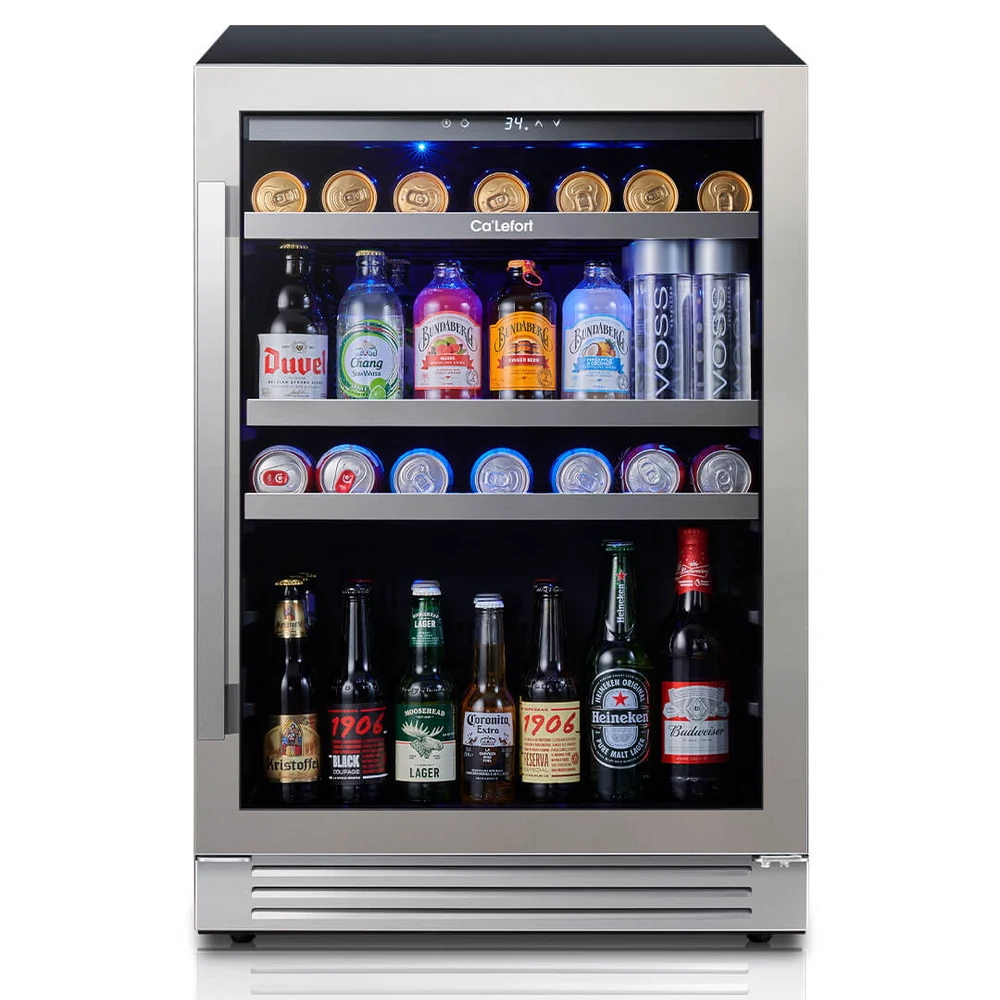
Ca'Lefort 24 inch glass-door beverage refrigerator in stainless steel, single door, up to 180 cans
Type
Glass-door beverage fridge
Capacity
5.65 cu ft / up to 180 cans
Dimensions
24-inch width class
Door
Double-pane glass
Venting
Front vent
Install
Built-in or freestanding
Lock
Confirm on listing
Temp range
34–54°F

A glass-door comparison for shaded built-ins where display value matters and the buyer still needs front exhaust.

Best for: A polished glass-door drink display with high capacity.

Skip if: Humidity, sun, or rough pool traffic will punish glass.

Confirm before you buy

Confirm front-vent wording, exact hinge side, and whether glass makes sense for the sun exposure.

Check price on Amazon

As an Amazon Associate I earn from qualifying purchases. Affiliate links do not change the price you pay.

Questions

Common questions

What happens if I build a rear-venting fridge into a cabinet?

The heat it removes from the drinks has nowhere to go, so it accumulates in the sealed space behind the unit and gets drawn straight back into the condenser. The fridge then runs continuously, struggles to hold temperature on a hot day, and the compressor works far harder than it was designed to. It is one of the more common reasons a built-in outdoor fridge fails early.

How do I tell whether a fridge is front-venting?

Look for a grille running along the bottom front of the unit, usually at the toe-kick, and look for explicit built-in or under-counter installation language in the listing and manual. A unit that only mentions freestanding use, or that asks for several inches of clearance at the rear and sides, is not front-venting no matter how flush the product photos make it look.

Can I add a vent to the cabinet instead?

Cutting vents into the island can help a marginal installation, but it does not convert a rear-venting appliance into a built-in one. The condenser still expects open air directly behind it, and cabinet vents rarely deliver enough flow in the right place. Buying a front-venting unit is cheaper and more reliable than rebuilding an island around the wrong appliance.

Does the front grille need clearance too?

Yes, and this is where installations quietly fail. The grille needs unobstructed air in front of it, which means no stacked patio furniture, no towels draped over it, and no decorative kick panel added afterwards that seals it off. Check the manual for the required clearance and then check the actual patio, because the obstruction usually arrives after the install is finished.

Other models we have spec’d

Not the right fit? Here is the rest of the lineup.

Each one is a real model we pulled specs on. Check the current listing before you buy — sizes and finishes change without notice.

Links above go to Amazon. As an Amazon Associate we earn from qualifying purchases.

Related buyer guides

Best front-vent baseline

Velieta 24-inch outdoor beverage refrigerator

Check price