Security feature
Do you need a locking outdoor beverage fridge?
A lock only matters if it is a real keyed lock on the door you are buying — confirm it on the listing, not the photo.
Short answer
A locking outdoor fridge makes the most sense when the patio is shared, rented, or used by kids and guests. If the fridge is in a private covered kitchen, focus on fit and cooling first.
When a lock helps
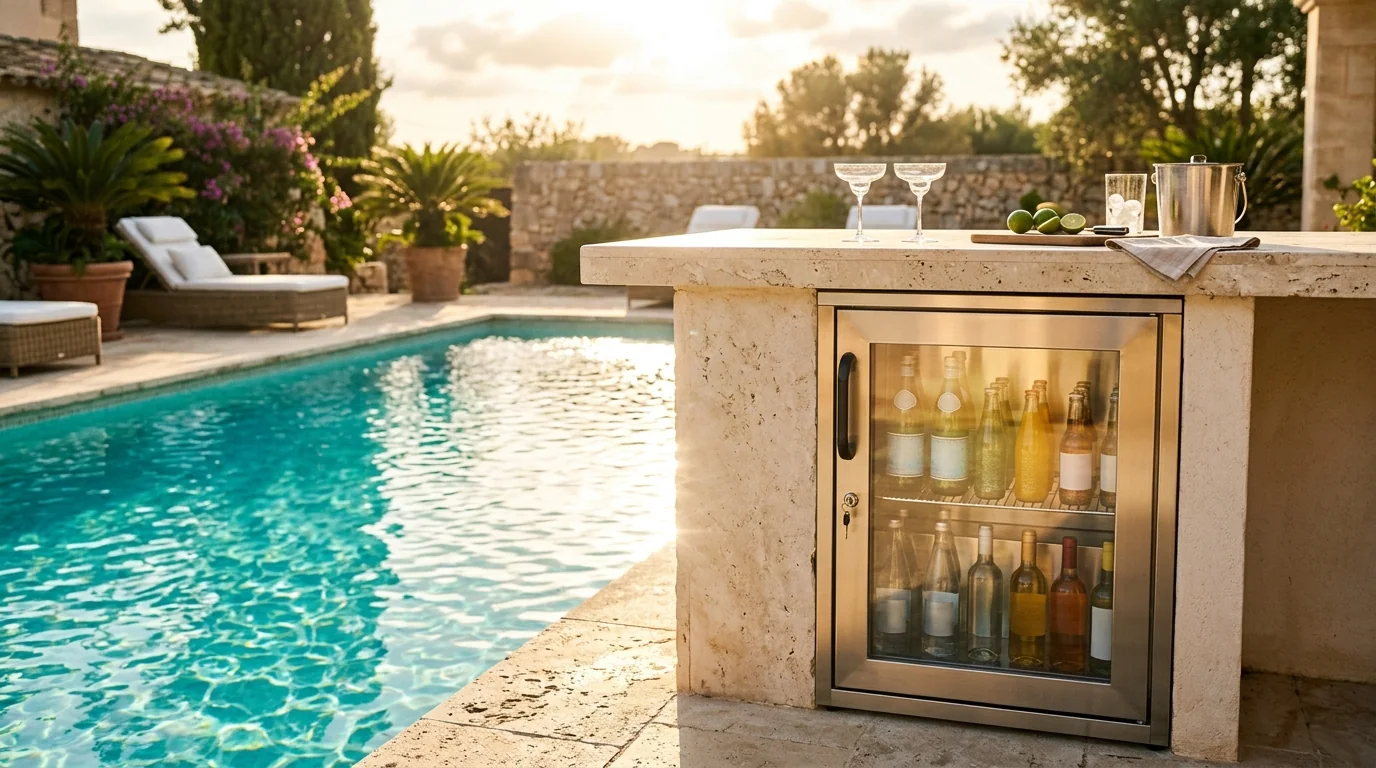
- Pool areas — A lock can help separate adult drinks from kids’ drinks.
- Short-term rentals — Hosts may want to control stocked items or cleaning access.
- Shared patios — Useful for condos, shared yards, and open bar setups.
What the lock does not solve
A lock does not make an indoor fridge outdoor-safe, does not protect against weather, and does not fix a poor venting setup. Treat it as a convenience feature after outdoor rating, cabinet fit, and cooling performance are handled.
Lock value by situation
| Buyer situation | Lock value | What to verify |
|---|---|---|
| Family pool patio | High | Door lock, key storage, shelf labels, and separate kid-drink zone. |
| Short-term rental | Medium to high | How easy it is for cleaners to access and whether replacement keys are available. |
| Private covered kitchen | Low | Cooling, venting, and door swing usually matter more than a lock. |
Look at the key style
Some locks are simple appliance locks meant for casual control, not serious security. That may be fine for a patio, but it matters for rentals or shared spaces.
Check the door seal
A lock should not be the only door detail you inspect. Gasket quality, hinge alignment, and door closure matter more for cooling performance.
Lock buying checklist
Check whether the lock is built into the appliance door, whether the keys feel easy to replace, whether the door can still reverse, and whether the lock interferes with the gasket seal.
For rentals, also think about operations: who has the key, where it is stored, what happens if a guest loses it, and whether a cleaner can restock without calling the owner.
Buying tip
If a lock is important, check whether it locks the actual door securely or only adds a light-duty latch. Also confirm you can still reverse the door if your layout needs it, because some lock designs limit hinge flexibility.